Gone are the days when Google was the sole dominant source for accessing information.
Today, nearly 50% of users rely on large language models (LLMs) to search for queries and find relevant information.
And if your website is not cited by AI systems, you risk falling behind the competition.
This raises an important question: how can brands improve visibility in AI search engines? What strategies help websites appear in AI overviews and other AI-generated responses?
In this blog, we will explore everything, from the strategies that effectively boost visibility in AI-driven search results to how to choose the right AI search engine optimization partner for your business.
Table of Contents
What is Brand Visibility in AI Search Engines?
Brand visibility in AI search engines means how often and how accurately a brand is recognized, mentioned, or cited in AI-generated responses from systems like LLMs, AI search assistants, and AI overviews.
Unlike traditional search, which depends on clickable links, AI search visibility is determined by a brand’s journey through the AI system: being discovered (Crawl), analyzed and understood (Understand), evaluated for authority (Trust), and ultimately selected and cited in AI-generated responses.
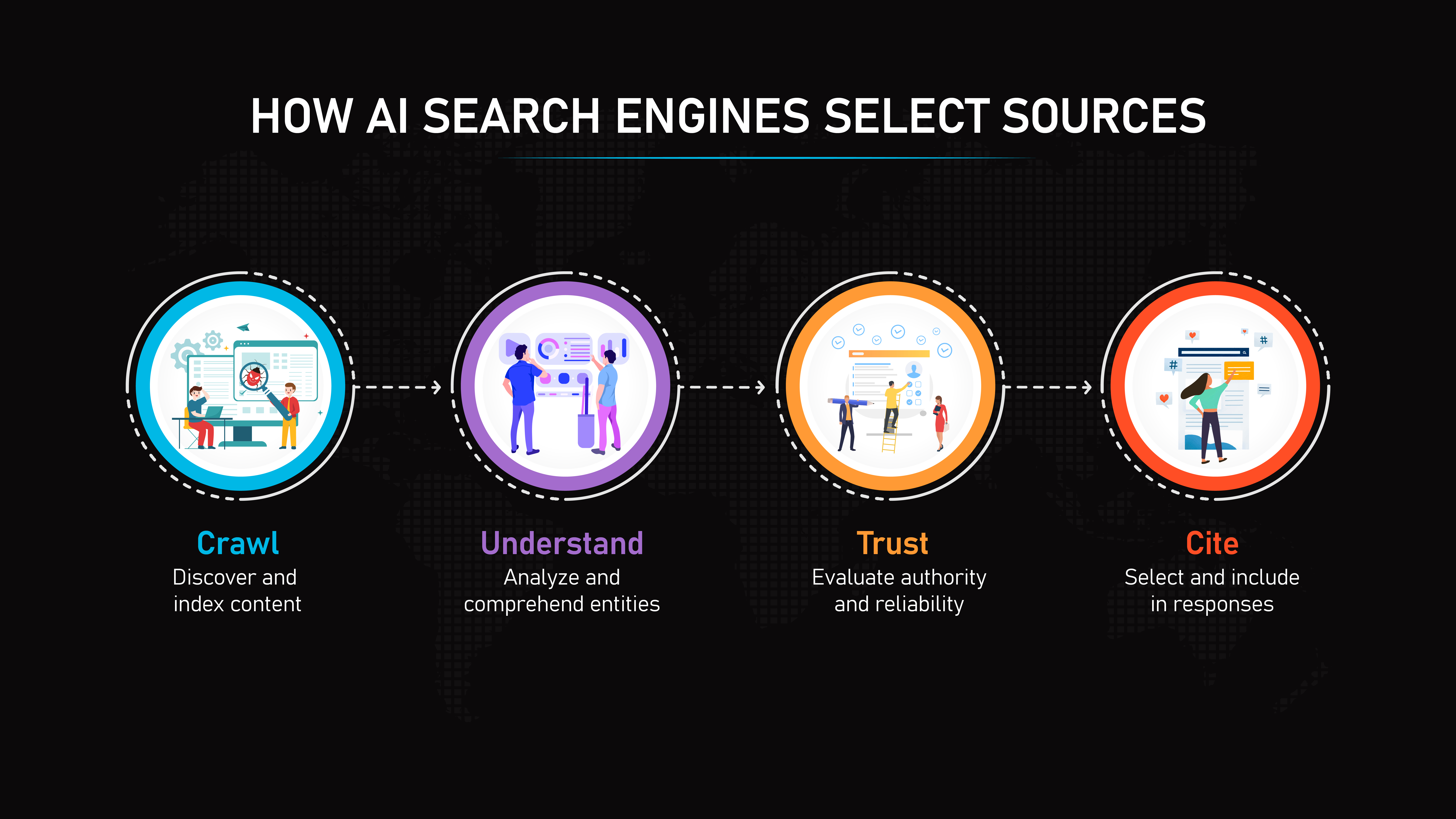
This can include direct brand mentions, citations, summarized insights, or recommendations in AI-generated outputs.
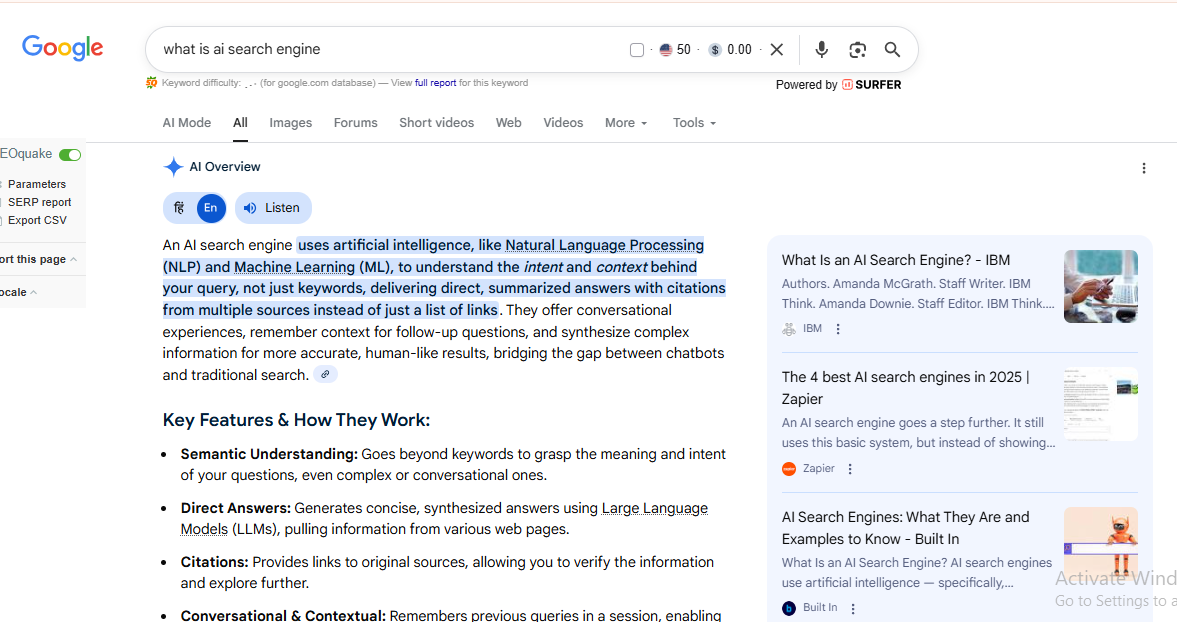
Here’s an example of what brand visibility in AI search engines means. Below, upon searching for “what is a search engine” several brands pop up. And the one ranking at the top, i.e., IBM, has potentially done the best job.
Traditional SEO vs AI Search Engines: A Side-by-Side Comparison
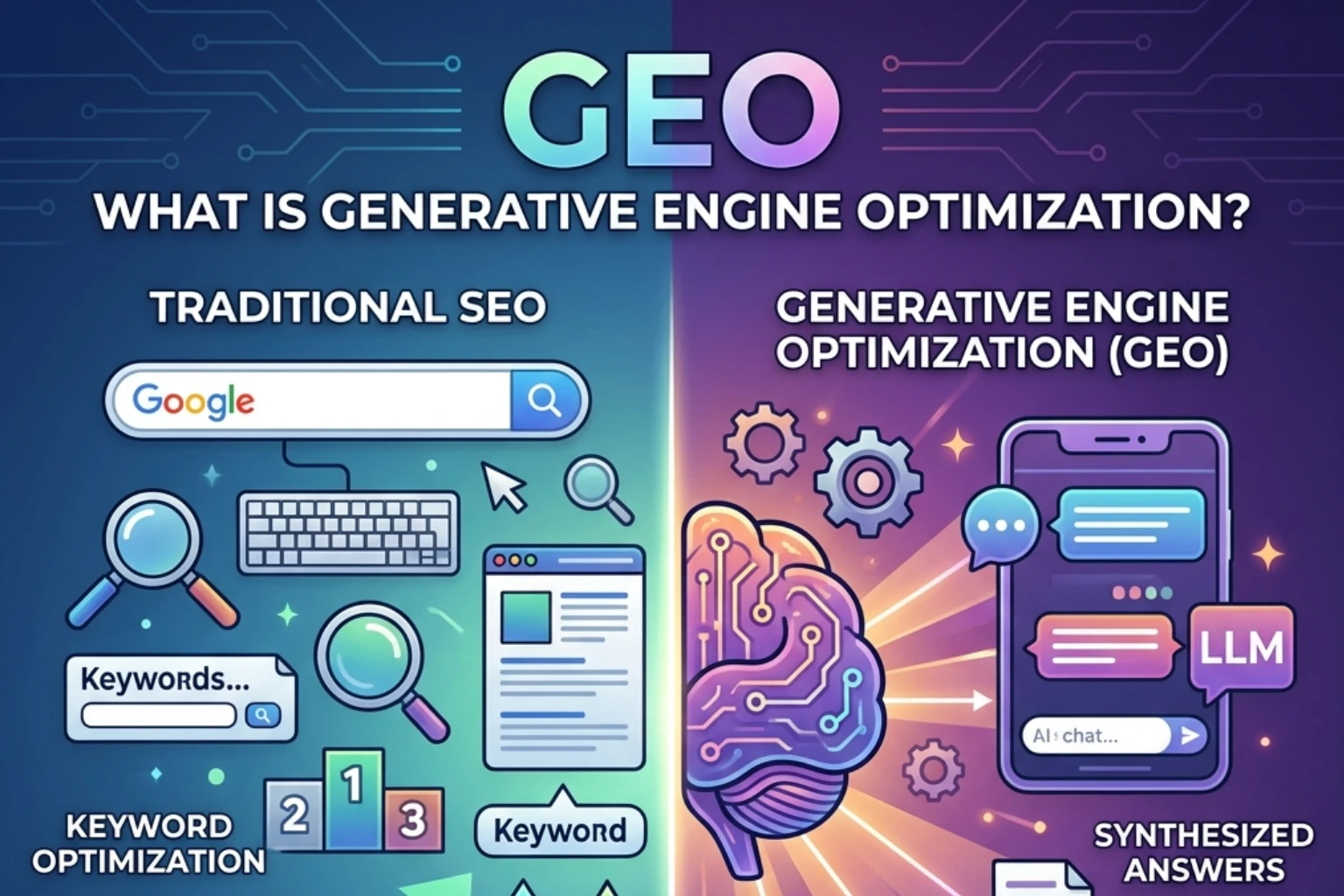
As search evolves from ranking links to generating direct answers, AI search engines evaluate content using different signals than traditional SEO. While both approaches rely on crawlability and relevance, their underlying priorities differ significantly.
Traditional SEO focuses on optimizing pages to compete in search engine results pages (SERPs). AI search engines, by contrast, focus on entity understanding, factual accuracy, and trustworthiness when deciding whether a source should be referenced in a generated response.
Below is a clear comparison outlining these differences:
| Aspect | Traditional Search (Classic SEO) | AI Search Engines (LLMs & Answer Engines) |
|---|---|---|
| Core Focus | Optimizing pages around keywords, rankings, and technical signals to compete in SERPs | Understanding entities (brands, people, concepts), their relationships, and factual reliability |
| Primary Goal | Rank web pages and links as high as possible in search results | Be selected, summarized, or cited as a trusted source within generated answers |
| Content Style | Long-form content optimized for keyword density, headings, and search intent | Clearly structured content designed to deliver direct, unambiguous answers |
| Keyword Importance | High—exact-match and semantic keywords drive visibility and rankings | Low to medium—keywords help topic detection, but meaning and context matter more |
| Brand Mentions | Helpful but secondary to backlinks for authority signals | Highly influential signals of credibility, even without direct links |
| Backlinks | One of the strongest ranking factors | Still useful, but treated as a supporting trust signal rather than a dominant factor |
| Content Originality | Useful, but aggregation and rewrites can still rank | Strongly favored—first-hand experience, proprietary data, and unique insights perform better |
| Author Credentials | Rarely assessed directly unless in sensitive niches | Explicitly evaluated; expertise and verifiable identity increase trustworthiness |
| E-E-A-T Role | Indirect—affects quality signals over time | Direct—used to determine inclusion, confidence level, and citation likelihood |
| Structured Data | Enhances rich snippets and SERP features | Improves machine understanding, content extraction, and factual alignment |
| Content Freshness | Periodic updates generally sufficient | Frequent, meaningful updates reinforce accuracy and reliability |
| Answer Formatting | Optional—content can rank without clear answers | Essential—Q&A formats, summaries, bullets, and definitions improve selection |
| AI-Generated Content | Can rank if optimized and human-edited | Penalized if generic, repetitive, or lacking verifiable sources |
| Technical SEO | Focus on crawlability, indexing, and site performance | Includes crawlability plus semantic clarity and machine readability |
| Brand Search Demand | Helpful but not required for rankings | Strong reinforcing signal of legitimacy, recognition, and trust |
Now that you know what brand visibility in search engines is, let’s learn how you can improve your brand visibility. After all, that’s what will drive traffic and conversions to your site.
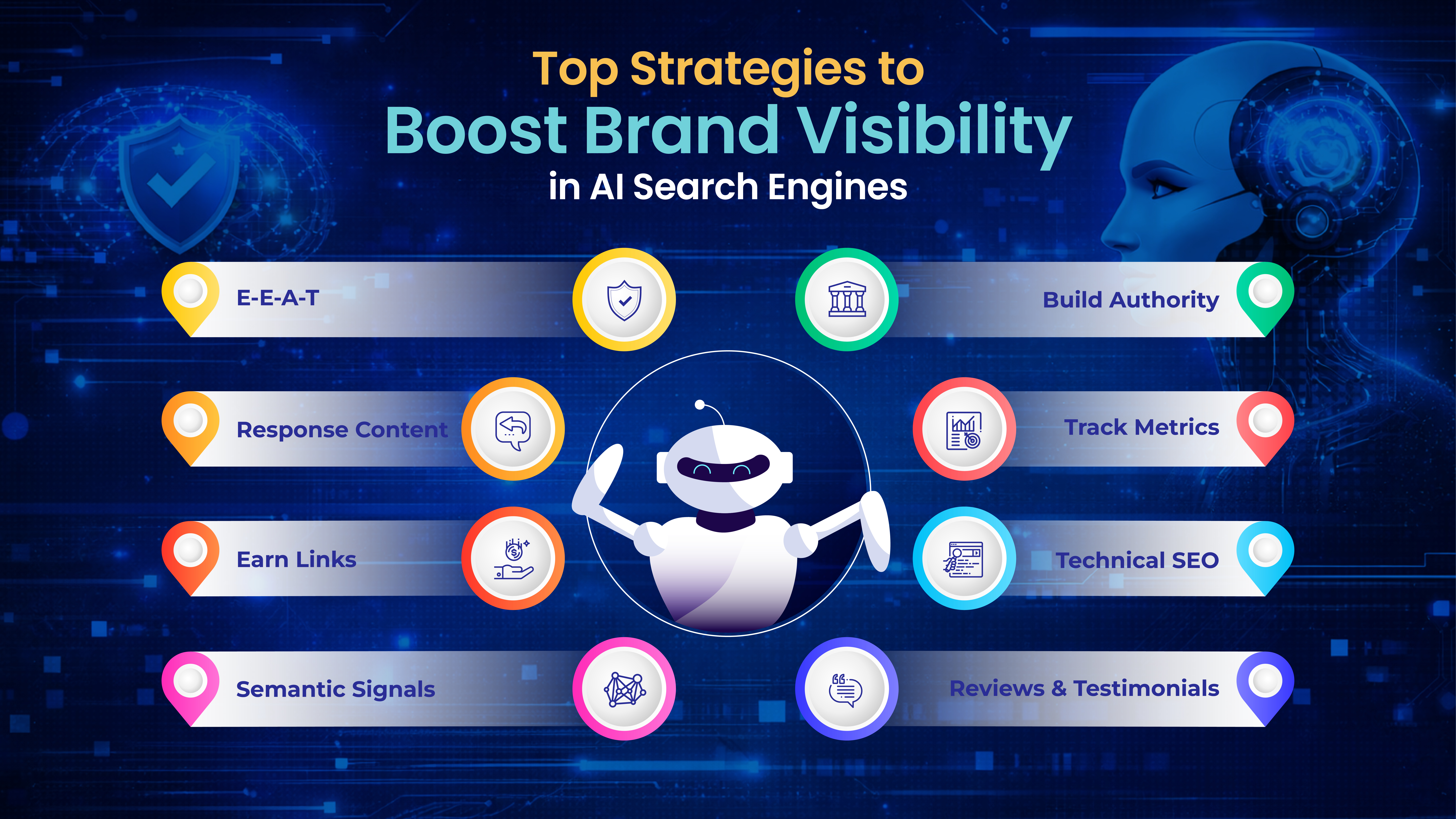
Top 8 Strategies to Improve Brand Visibility in AI Search Engines
AI-powered search engines now deliver direct answers instead of traditional result lists. To be included in these responses, brands must move beyond traditional SEO and focus on contextual relevance. The strategies below highlight proven ways to help AI systems understand, trust, and surface your brand.
Here are the top 8 strategies that work to improve your AI visibility:
1. Develop Response-driven Content
Create content that answers customer queries. To be cited by AI, you need to focus on intent over keywords, value over promotion, and fact over false engagement. AI prefers content that solves real problems users are facing.
Make your content easy to read, understand, and remember. Start by researching potential queries people are searching for. And create content accordingly. Try to add concise explanations before expanding into supporting details, examples, or context.
Besides, focus on the overall content structure. Add headings, subheadings, and bullet points wherever required. All this signals AI to identify and use your content accurately when generating responses.
Here’s a Reddit user highlighting a similar viewpoint:

Source: Reddit
2. Align Content with the E-E-A-T Principle
Google’s EEAT (Experience, Expertise, Authoritativeness, and Trustworthiness) is a key element in how the search engine assesses and ranks content.
Content that demonstrates experience through first-hand insights helps AI models identify information grounded in real-world practice.
Clear expertise, shown through accurate explanations and qualified authorship, increases confidence in factual reliability.
Authoritativeness earned through citations, mentions, or recognition from reputable external sources signals to AI systems that the content is trusted beyond its own website.
Trustworthiness, reinforced by transparent sourcing, up-to-date information, and verified data, reduces the risk of misinformation.
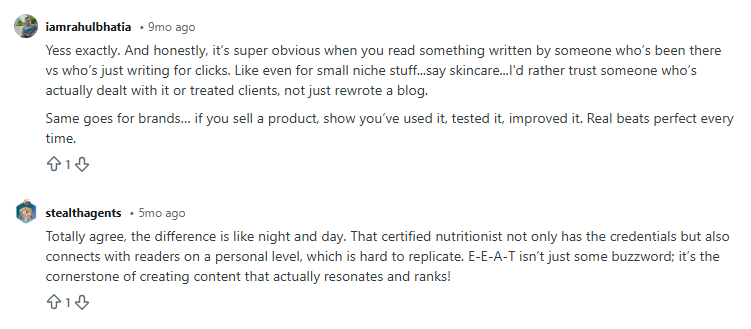
For example, a medical article written by a licensed doctor (experience) describing how they treated real patients, reviewed by a senior specialist (expertise), cited by healthcare publications (authoritativeness), and supported with official clinical guidelines and clear disclosures (trustworthiness) is more likely to be surfaced or cited in AI-generated search responses.
Here’s a Reddit user highlighting a similar viewpoint:
Source: Reddit
3. Establish Brand Authority
Brand authority is how credible, knowledgeable, and trustworthy a brand is perceived within its industry. Authority matters because AI-powered search engines favor content they can trust.
Authoritative brands are more likely to be surfaced, cited, or summarized, while low-authority sources are often overlooked.
To improve brand authority, focus on a clear area of expertise and publish accurate, in-depth content. And make sure you back it with real experience and verified data. Gain recognition through backlinks, mentions, and citations from reputable sources.
Maintain transparency by keeping content updated, clearly attributing authors, and following industry standards. Consistent signals like these make AI systems more likely to recognize and elevate your brand.
How to Check Brand Authority?
- Search visibility: See if your brand appears in Google snippets, “People also ask,” or branded searches.
- Backlinks: Use tools like Ahrefs or Google Search Console to track links from reputable sites.
- Content citations: Check if other sites quote or reference your content.
4. Track Performance Metrics
Monitoring your content's performance is key to improving AI visibility. By tracking important metrics such as organic traffic, click-through rates, time on page, and engagement, you can see which content connects with users and AI systems.
For AI-specific visibility, watch how often your content shows up in featured snippets, "People also ask" sections, or is mentioned by other trusted sources. You can use tools like Google Analytics, Search Console, and SEO platforms to gather useful data.
Regularly reviewing these metrics helps you improve content that isn't doing well, sharpen your strategy, and keep your brand visible and relevant in AI-driven search results.
5. Semantic Relevance and Content Accuracy
Large language models (LLMs) don’t just match keywords; they interpret meaning, context, and relationships between ideas. This makes semantic relevance and clarity crucial for improving AI visibility.
Content that clearly explains what your brand does, who it serves, and where its expertise lies helps AI systems understand and categorize your offerings accurately. Use natural, conversational language instead of stuffing in keywords.
Clearly define your services, processes, and value propositions, and explain them in a way that reflects how users typically ask questions.
Here’s a Reddit user highlighting a similar viewpoint:
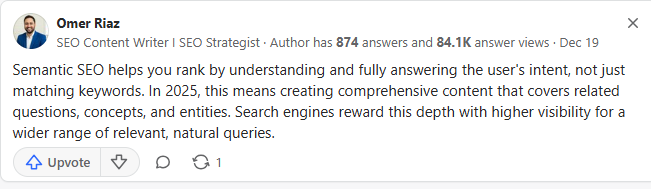
Source: Reddit
6. Use Reviews and Testimonials
Reviews and testimonials act as strong trust signals for AI-powered search engines, as they reflect real user experiences and third-party validation. Backlinko reports 71% of consumers read online reviews when researching businesses.
AI systems are more likely to reference brands that show consistent, authentic feedback from customers rather than self-promotional claims.
Encourage customers to leave honest reviews on platforms like Google, Trustpilot, G2, or industry-specific directories.
Display testimonials clearly on your website, especially on service, product, and landing pages, using natural language and specific outcomes instead of generic praise.
To maximize AI visibility, keep reviews updated, avoid fabricated or exaggerated feedback, and include structured elements such as star ratings, names, or business types where appropriate.
When reviews consistently reinforce your credibility and service quality, AI systems can more confidently surface your brand as a trusted option in generated search responses.
7. Maintain Technical Accessibility
Technical accessibility ensures that AI search engines and large language models can reliably crawl, interpret, and extract information from your website.
Even high-quality content can be ignored if technical barriers prevent AI systems from understanding it.
Key technical practices that improve AI visibility:
- Clean crawlability: Ensure important pages are indexable, not blocked by robots.txt, noindex tags, or excessive JavaScript rendering.
- Fast loading and stable pages: Core Web Vitals (LCP, CLS, INP) affect how reliably AI systems process content at scale.
- Structured data (Schema.org): Use structured data for organizations, authors, articles, FAQs, products, and reviews to help AI identify entities and relationships.
- Clear entity signals: Consistent use of brand name, organization schema, author profiles, and about pages strengthens entity recognition.
- Accessible HTML structure: Proper use of headings (H1–H3), lists, tables, and semantic HTML improves extraction accuracy.
- Canonical consistency: Avoid duplicate content confusion by using canonical tags correctly.
AI-powered search engines prioritize sources that are technically easy to parse, consistently structured, and semantically explicit. Poor technical hygiene directly reduces the likelihood of being cited or summarized in AI-generated answers.
8. Enable Natural Language Queries
AI search engines are designed to respond to how people naturally ask questions, not how they type keywords. Optimizing for natural language queries improves alignment with AI-generated responses.
Effective approaches include:
- Question-based content: Write content that mirrors real user questions (who, what, how, why, when) instead of keyword fragments.
- Conversational phrasing: Use clear, human language that reflects spoken queries commonly used in AI chat interfaces.
- Contextual completeness: Address follow-up questions within the same page to reduce ambiguity for AI systems.
- FAQ and Q&A formats: Structured question–answer sections are particularly effective for AI extraction.
- Avoid keyword stuffing: Over-optimization reduces semantic clarity and can weaken AI comprehension.
AI systems favor content that sounds like a knowledgeable human response rather than traditional SEO copy. Natural language optimization helps your brand appear more frequently in AI overviews, chat-based answers, and voice-driven search experiences.
Key Takeaways
AI search engines are transforming how online visibility functions. Being discoverable is no longer just about appearing in ranking- it’s about being cited and selected by AI systems.
Brands that show up regularly in AI responses have some shared characteristics. They create content that responds to user needs, they demonstrate genuine experience and expertise, while having solid technical foundations.
But how do you get cited by AI systems? That’s when Aron Web Solutions comes in.
With 13 years of driving more conversions for hundreds of businesses, Aron Web Solutions understands the importance of AI and thus follows an AI-first approach.
How We Help Brands Improve AI Search Visibility
We help brands improve visibility in AI-powered search engines by:
- Auditing crawlability, indexability, and technical accessibility to ensure AI systems can reliably access and understand your content.
- Restructuring and optimizing content for AI-friendly formats, including direct answers, semantic clarity, and natural language queries.
- Building clear entity signals so AI systems can confidently associate your brand with specific topics and expertise.
- Identifying opportunities for citations, mentions, and authoritative references that AI models rely on when generating responses.
- Tracking AI-relevant performance indicators beyond traditional rankings to measure real visibility impact.
Our approach is grounded in how AI search engines actually function—not assumptions, shortcuts, or outdated SEO tactics.
If your brand is struggling to appear in AI-generated answers or wants to secure visibility ahead of competitors, we provide the clarity, structure, and execution needed to achieve consistent, sustainable AI search visibility.
Want to strengthen your brand’s presence on AI-powered search platforms? Contact us today!
Frequently Asked Questions
Boost AI search visibility by publishing clear, trustworthy content that directly addresses user intent, targets long-tail queries, and enhances E-E-A-T through digital PR and community involvement.
To improve visibility in Google AI Overviews, focus on creating clear, well-structured, and authoritative content that directly answers user questions. Use concise headings, factual explanations, and schema markup to help AI understand your content.
AI SEO tools, such as Bing Copilot insights, help improve a brand’s visibility in AI-generated search results by ensuring content is clearly understood, accurately represented, and referenced by AI systems.
ZipTie AI Search Analytics is a platform that helps brands monitor and analyze their visibility in AI-powered search results. It tracks how and where a brand appears in AI-generated answers, identifies content gaps, and provides insights to improve performance in AI-driven search experiences.
Brand mentions in AI search can be tracked using AI search analytics tools that monitor AI-generated responses across search engines and conversational platforms. These tools analyze whether a brand is referenced, how it is described, and in what context.
AI search optimization tools increase organic traffic by aligning content with how AI systems select, summarize, and reference information. By improving clarity, topical authority, and entity recognition, these tools help brands appear in AI-generated answers, leading to higher visibility and more qualified traffic.
Yes. Aron Web Solutions provides AI search optimization services focused on improving brand visibility in AI-generated responses, AI overviews, and answer engines by optimizing content structure, entity signals, E-E-A-T factors, and technical accessibility. Get a quote today to understand how these strategies can be applied to your specific business goals.