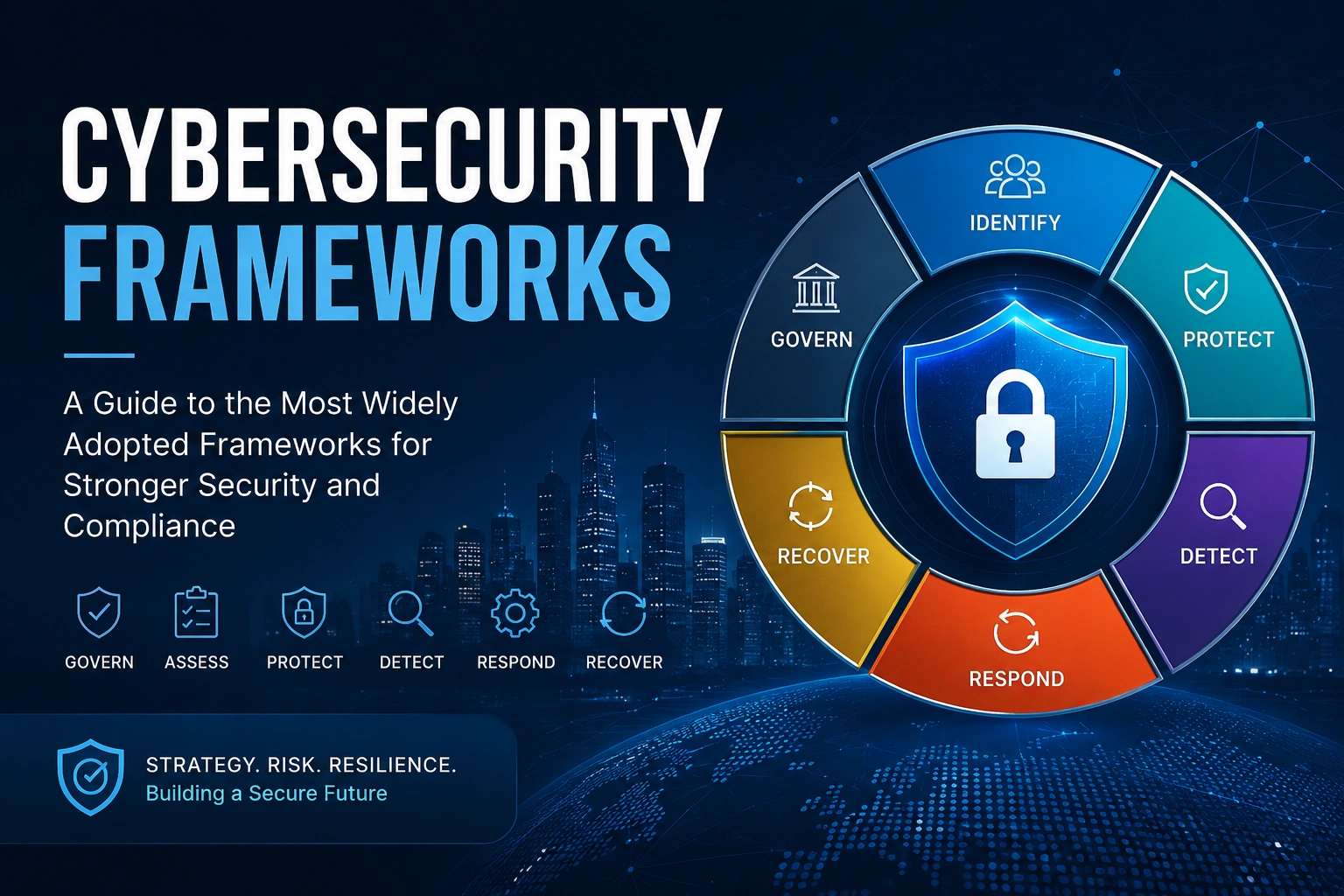
With increasing cyberattacks, understanding cybersecurity frameworks has become a necessity. A cybersecurity framework is a structured set of guidelines and best practices that helps companies manage cyber threats.
Due to huge requirements, organizations usually prefer to combine multiple frameworks and use one as a core governance model and others to meet specific compliance or technical needs, rather than opting for a single one.
This guide explores seven of the most widely used cybersecurity frameworks and standards, outlining their purpose, target users, and role within a modern security program.
Table of Contents
1. NIST Cybersecurity Framework 2.0
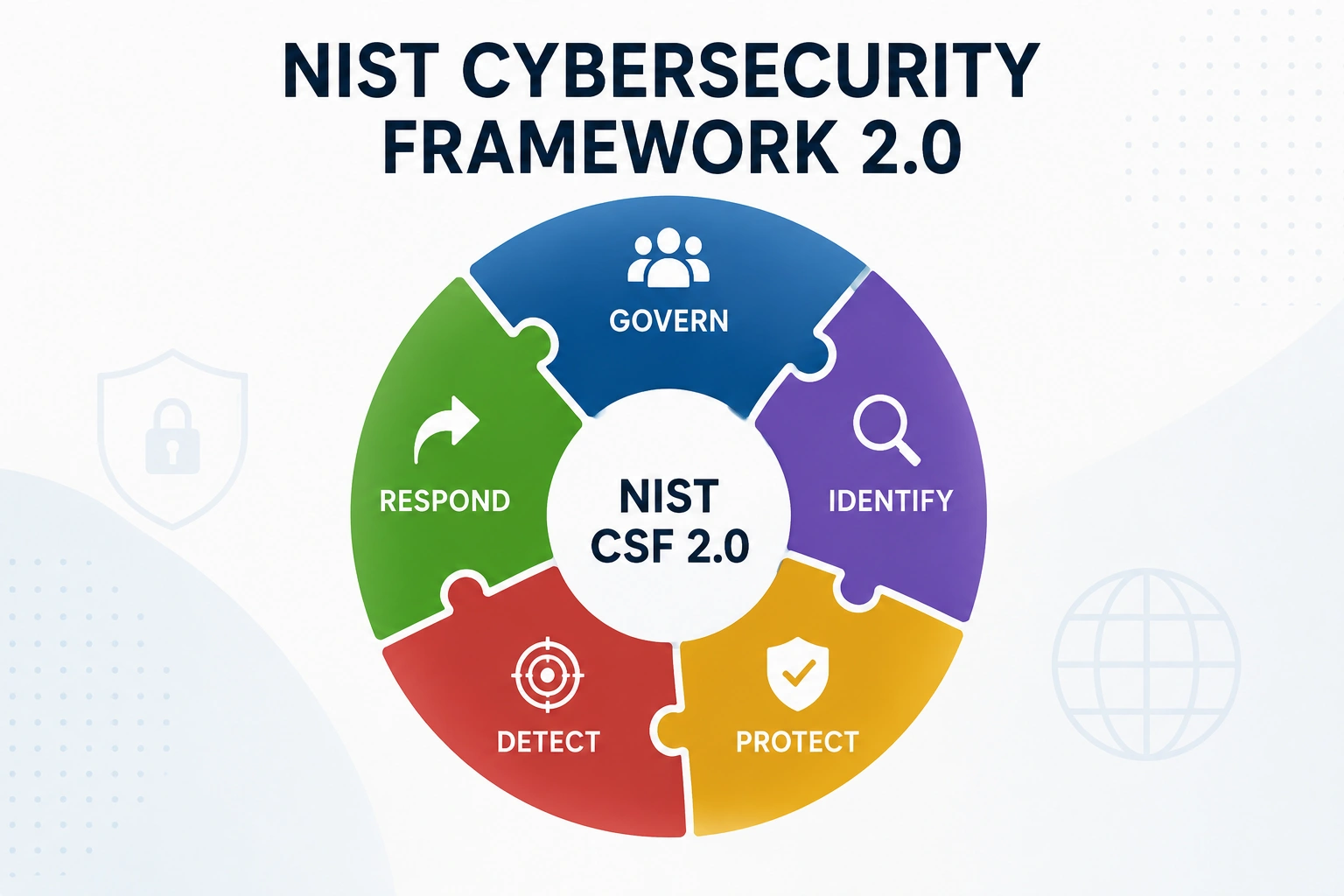
The NIST (National Institute of Standards and Technology) CSF began in 2014 under Executive Order 13636, originally aimed at securing critical infrastructure sectors such as energy and finance.
The framework is built around six core functions. The original five, Identify, Protect, Detect, Respond, and Recover, have been joined by a sixth: Govern. This addition is the defining feature of 2.0.
It shifts accountability upward, placing executive risk ownership, board-level transparency, and supply chain oversight at the core of any compliant security program. Governance is no longer an afterthought; it's the first function.
NIST CSF 2.0 also expanded its applicability far beyond federal infrastructure, explicitly addressing small and midsized businesses with dedicated companion resources. In 2025, NIST extended the framework further with a draft Cyber AI Profile, addressing AI-specific risks and practices — a sign of where the framework is heading.
Many organizations use NIST CSF as their core design framework, then layer attestations like SOC 2 or ISO 27001 for go-to-market credibility.
Best for
Any organization seeking a flexible, scalable foundation for its security program. Particularly suited to US-based enterprises, government contractors, and organizations beginning their security journey.
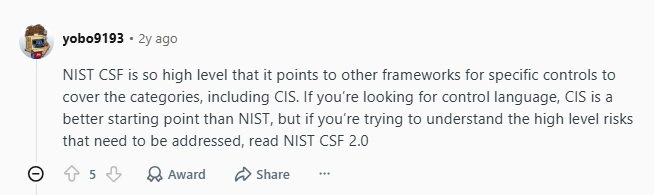
As highlighted by a Reddit user, NIST CSF 2.0 provides a high-level framework for understanding and managing cybersecurity risks.
Source: Reddit
2. ISO/IEC 27001
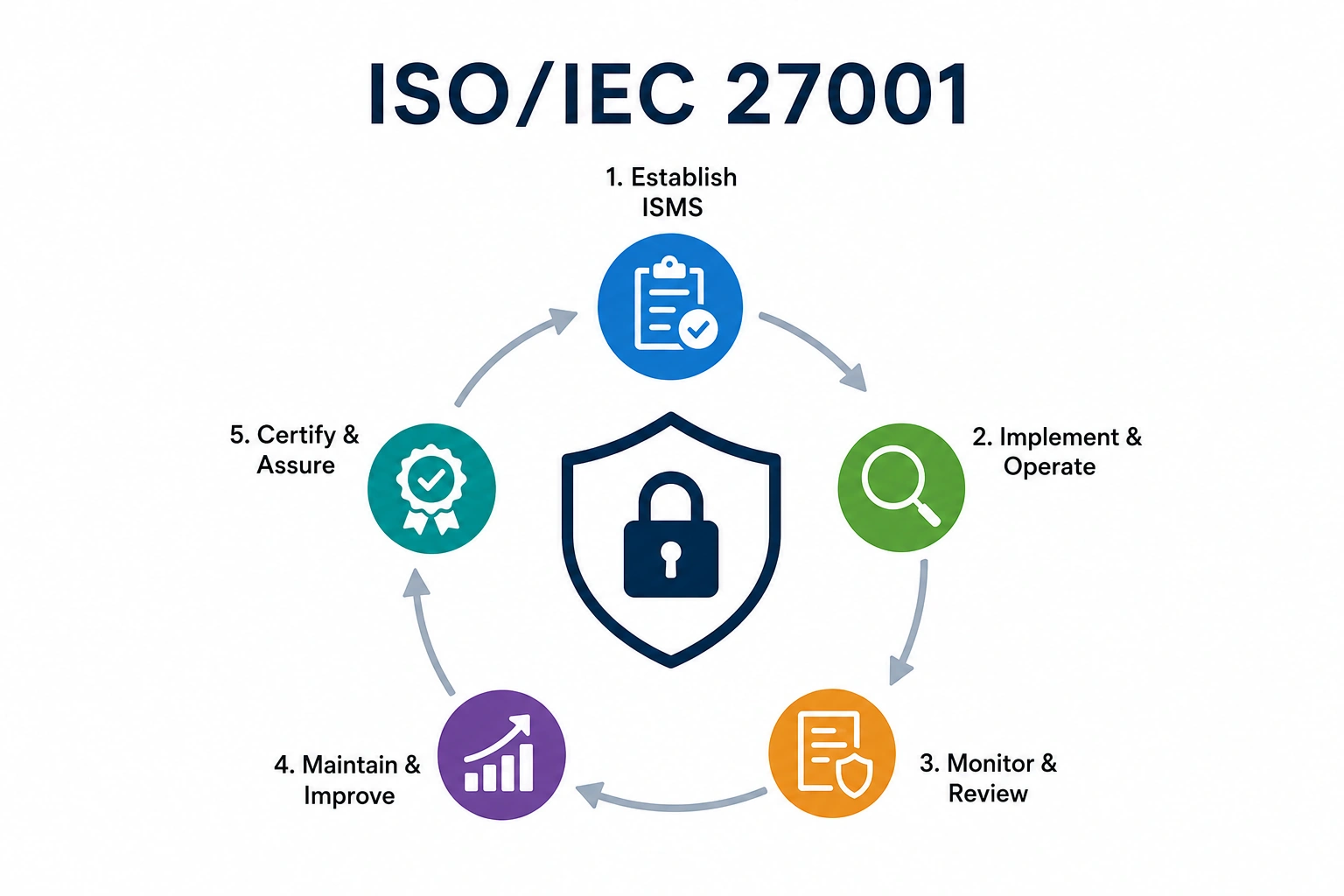
ISO 27001 (International Organization for Standardization) is widely regarded as the gold standard for building an Information Security Management System (ISMS).
Developed by the International Organization for Standardization, it focuses on the CIA triad, Confidentiality, Integrity, and Availability, providing a defense-in-depth methodology that is both rigorous and internationally recognized.
The 2022 revision, which became mandatory for certified organizations in October 2025, restructured the framework's control set significantly. The previous version had 114 controls in 14 categories.
The updated version consolidates these into 93 controls organized across four themes: organizational, people, physical, and technological. New controls were added in areas such as threat intelligence and cloud services security, two domains conspicuously absent from the previous version.
For organizations operating globally, ISO 27001 certification carries substantial commercial value. It opens doors to enterprise procurement processes and satisfies the security assurance demands of international customers in ways that purely US-centric frameworks cannot.
Best for
Organizations seeking international credibility, those pursuing enterprise-level sales, or any company operating across multiple regulatory jurisdictions. Often paired with CIS Controls for practical implementation guidance.3. SOC 2 (Service Organization Control)
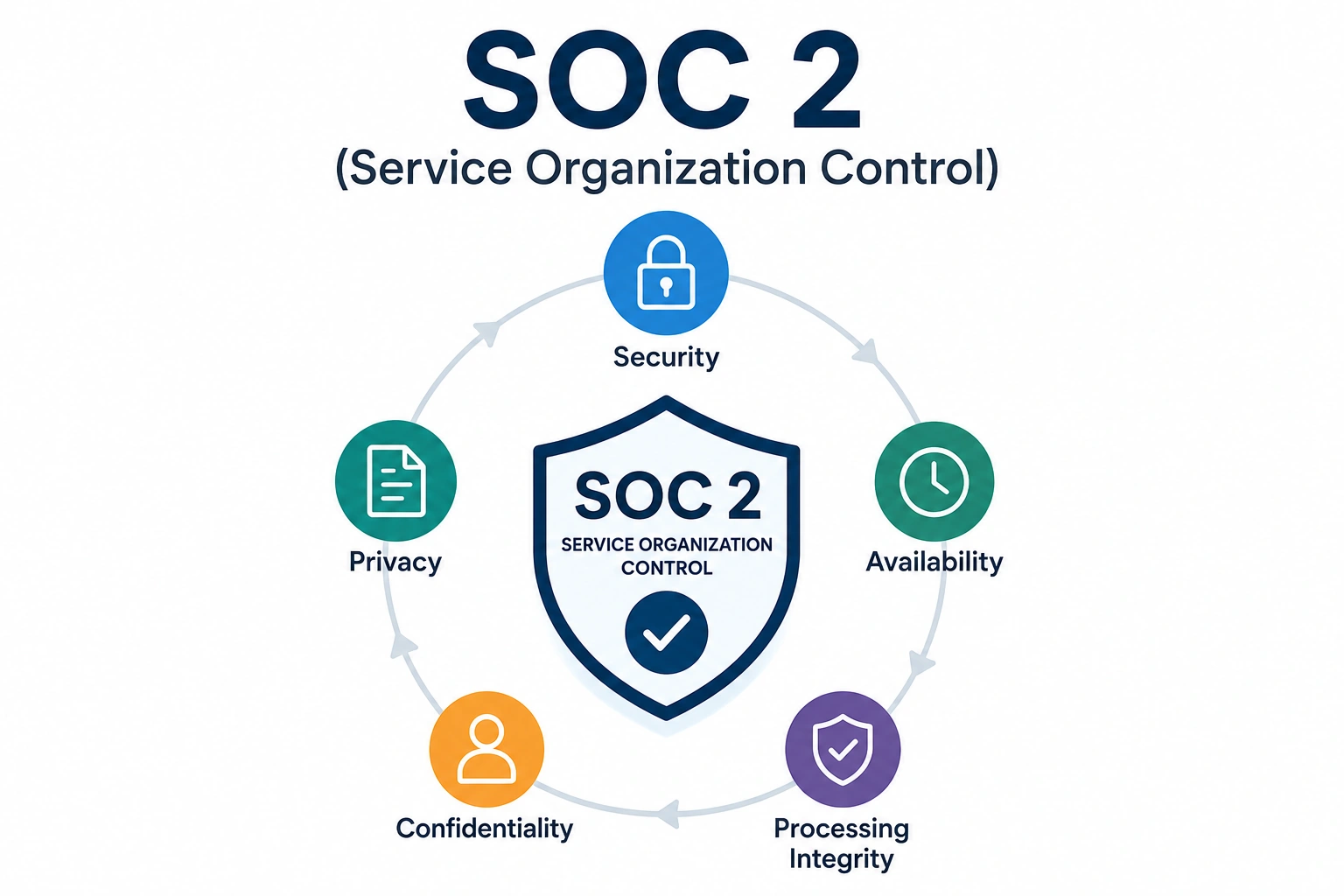
SOC 2 is an auditing standard used by third-party auditors to assess the security, availability, processing integrity, confidentiality, and privacy of a company's systems and services.
These five principles, collectively the Trust Services Criteria, form the foundation of what SOC 2 auditors evaluate. For cloud service providers, technology vendors, and any company that handles customer data on behalf of clients, SOC 2 has become a baseline requirement.
SOC 2 includes extensive security, availability, confidentiality, privacy, and processing integrity requirements assessed through a rigorous audit process. Audits can take a year to complete, resulting in a report that attests to the vendor's cybersecurity posture.
Because of this comprehensiveness, SOC 2 is one of the most demanding frameworks to implement, particularly for organizations in finance or banking, where the compliance bar is higher than in other sectors.
Organizations pursuing SOC 2 must provide detailed documentation of their internal processes: access control measures, data encryption protocols, incident response plans, and evidence of control effectiveness, such as audit logs and penetration test results..
Best for
SaaS vendors, cloud providers, managed service providers, and any technology company whose customers require formal security assurance. Central to any third-party risk management program.
4. CIS Controls v8.1
While frameworks like NIST CSF and ISO 27001 provide governance structures, the CIS Critical Security Controls provide something different and complementary: prescriptive, prioritized, actionable safeguards. Rather than asking what your program should look like, the CIS Controls tell you exactly what to do and in what order.
Version 8.1, released in June 2024, introduces 18 safeguards organized into three Implementation Groups (IGs) based on organizational maturity and risk profile. A small business with modest IT resources starts at IG1, the so-called "cyber hygiene" baseline.
More mature organizations progress through IG2 and IG3. This tiered structure makes CIS Controls one of the most accessible entry points into formal security practice for organizations with limited budgets.
The update also added a Governance security function aligned with NIST CSF 2.0, as well as a new "Documentation" asset category covering plans, policies, and procedures.
Best for
Organizations of any size that need practical, prioritized security guidance. Especially valuable for SMBs starting their security journey, and enterprises seeking a unified compliance baseline across multiple frameworks.
5. MITRE ATT&CK
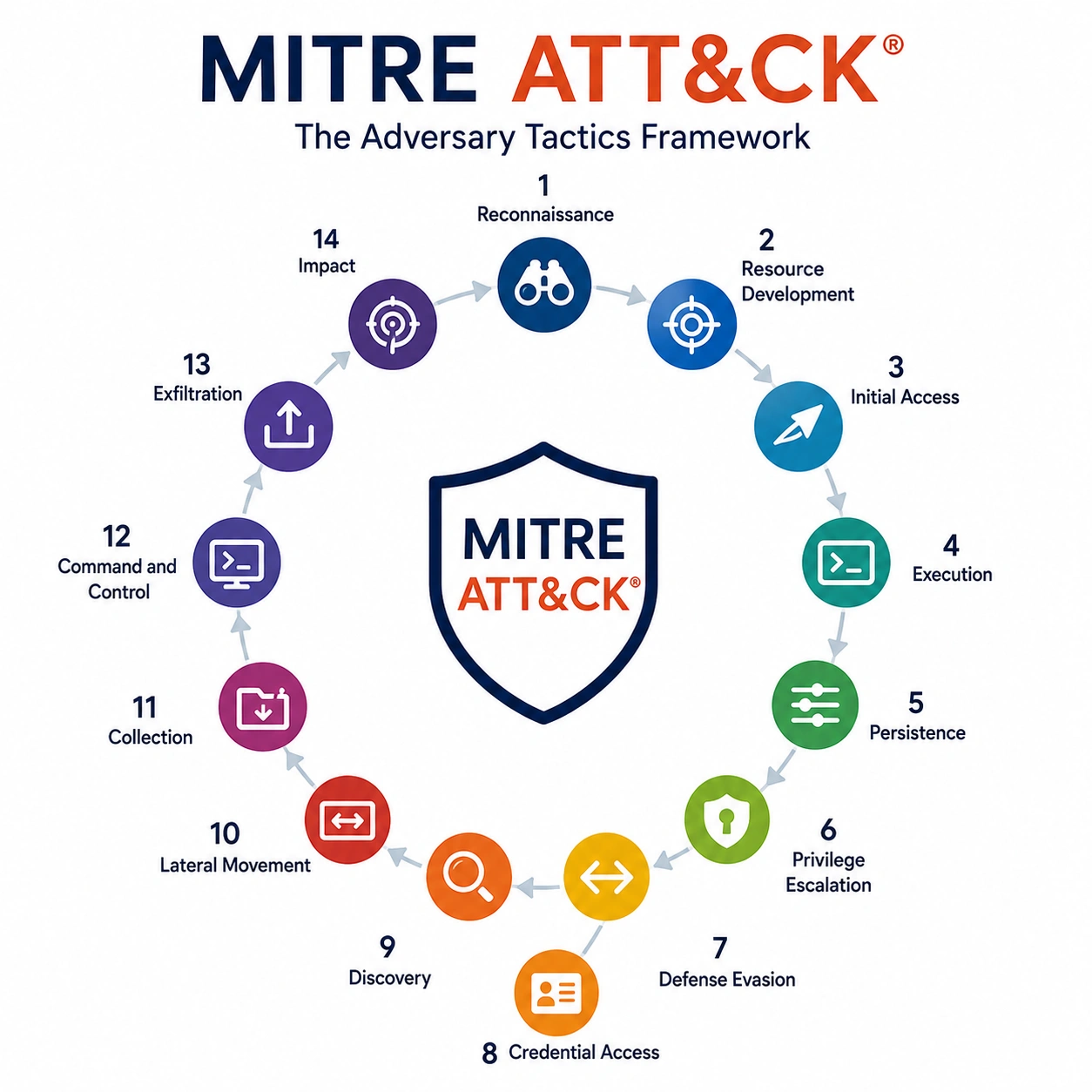
MITRE ATT&CK serves a distinct role among cybersecurity frameworks. Rather than focusing on compliance requirements or governance practices, it provides a comprehensive, publicly available repository of adversary tactics and techniques based on observed real-world cyberattacks.
Based on documented adversary behavior, it catalogs 13 tactics covering the full adversary lifecycle, from initial access and persistence to exfiltration and impact.
Where governance frameworks tell organizations what controls to have, MITRE ATT&CK tells them what attacks to defend against. SOC teams use it to map their detection capabilities against known adversary techniques, identifying gaps in coverage before attackers can exploit them.
It provides a shared, precise language for communicating threat activity, a common vocabulary across security vendors, analysts, and incident responders that dramatically improves coordination during incidents.
In 2025, with ransomware groups increasingly exploiting third-party vendors, ATT&CK's supply chain attack matrices have become particularly relevant. Security operations teams map their SIEM rules, EDR detections, and hunting queries directly to ATT&CK technique IDs, enabling measurable coverage metrics and systematic detection engineering.
Best for
Security operations teams, threat hunters, red teams, and detection engineers. Used as a detection validation layer on top of governance frameworks. General enterprises pair it with ISO 27001 for detection coverage.
6. PCI DSS 4.0
For any organization that processes, stores, or transmits cardholder data, PCI DSS (Payment Card Industry Data Security Standard) is not optional — it is a contractual requirement from card brands including Visa, Mastercard, and American Express. Version 4.0 became fully effective in March 2025 and represents the most substantial update the standard has seen in years.
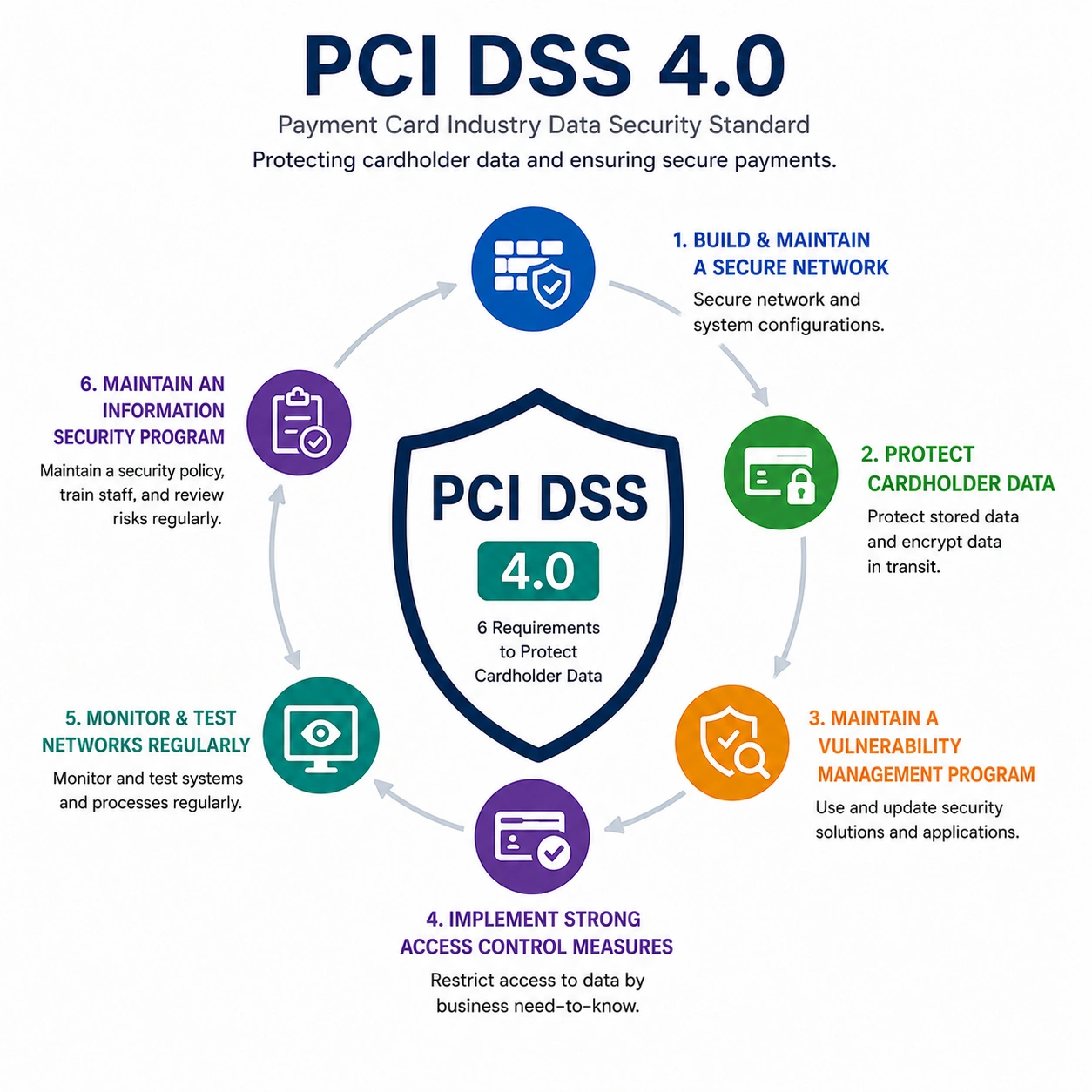
PCI DSS 4.0 outlines 12 high-level requirements covering network security, access control, encryption, vulnerability management, and monitoring. The version 4.0 update introduced 47 new requirements, shifting the standard's philosophy toward continuous compliance rather than point-in-time assessments.
Multi-factor authentication requirements were expanded, and customized implementation approaches now allow organizations to demonstrate their security intent in more flexible ways.
Non-compliance carries penalties of $5,000 to $100,000 per month, making it one of the most financially consequential frameworks for relevant organizations. Smaller merchants may complete self-assessment questionnaires, while larger organizations undergo formal qualified security assessor (QSA) audits.
Financial services cybersecurity programs typically layer PCI DSS with DORA (for EU operations), SOC 2 (for customer assurance), and NIST CSF for broader risk governance.
Best for
Retailers, e-commerce platforms, payment processors, banks, and any business accepting credit or debit card payments. Compliance is mandatory — the question is only how to achieve it efficiently.
7. HIPAA Security Rule
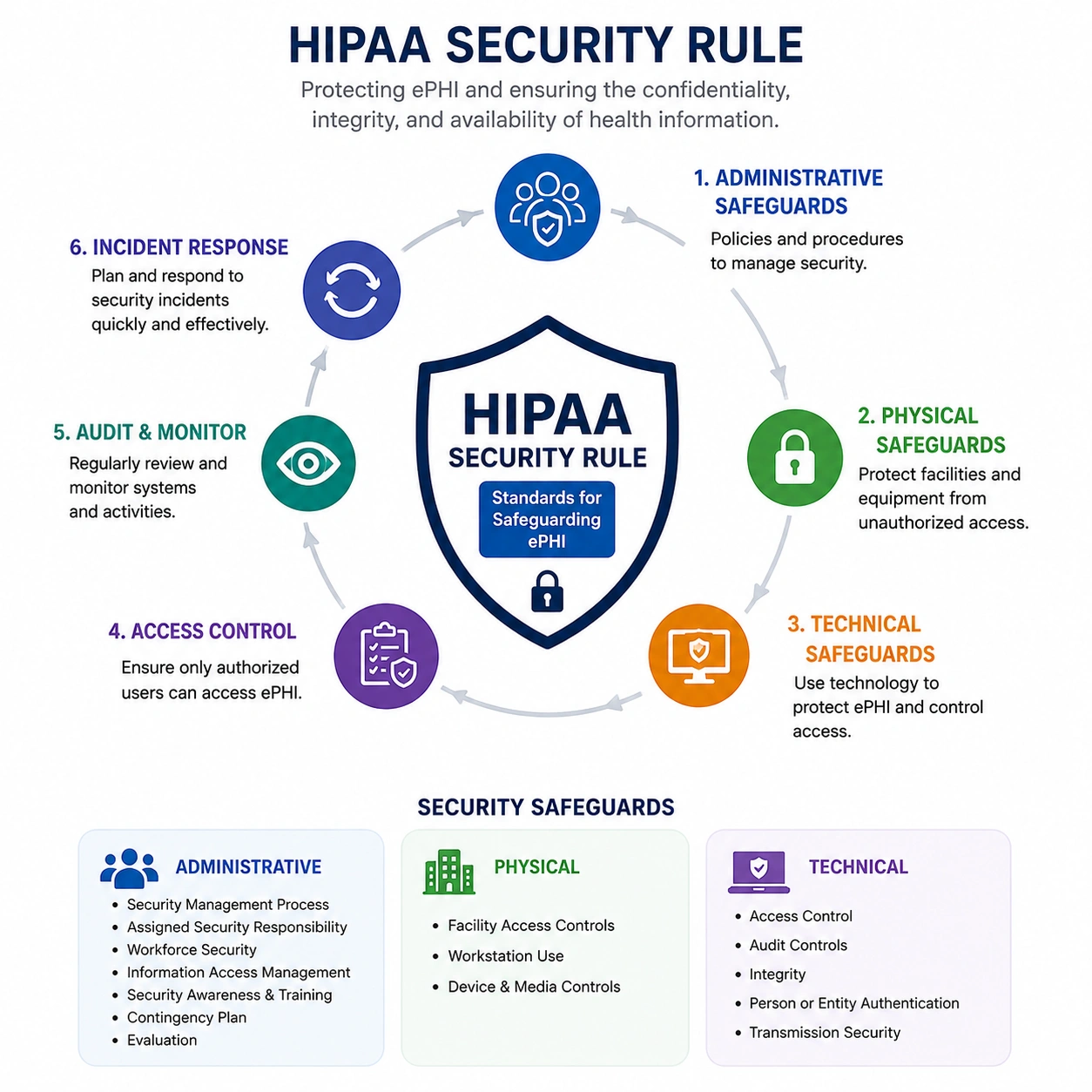
HIPAA — the Health Insurance Portability and Accountability Act — is primarily a federal regulation, but its Security Rule functions as a de facto cybersecurity framework for the entire US healthcare ecosystem.
Any covered entity or business associate that handles electronic protected health information (ePHI) must comply, including hospitals, insurers, medical device companies, health tech startups, and their vendors.
The Security Rule requires a layered set of administrative, physical, and technical safeguards to protect ePHI. Key requirements include access controls, audit logging, encryption, workforce training, and documented incident response procedures.
Unlike PCI DSS or SOC 2, HIPAA does not prescribe specific technologies — it defines outcomes and allows organizations flexibility in how they achieve them, creating a risk-based compliance model.
Healthcare cybersecurity teams face unique threat profiles specifically targeting ePHI, and breaches in this sector are among the most costly in any industry. The recommended approach is to use HIPAA as the foundational compliance layer, add NIST CSF for broader risk governance and board-level reporting, and map detection coverage with MITRE ATT&CK.
Frameworks like HITRUST CSF exist to help healthcare organizations unify multiple compliance requirements, including HIPAA, NIST, and ISO 27001, into a single certification program.
Best for
Healthcare providers, health insurers, health tech companies, and any business associate that touches ePHI. Often layered with NIST CSF for governance depth and HITRUST for unified compliance.
| Framework | Type | Best Industry Fit | Key Strength |
|---|---|---|---|
| NIST CSF 2.0 | Governance | All sectors | Flexible foundation; board-level governance |
| ISO 27001 | Certification | Global enterprise | International credibility; ISMS structure |
| SOC 2 | Audit standard | SaaS / cloud vendors | Customer trust; third-party assurance |
| CIS Controls v8.1 | Prescriptive safeguards | All sizes | Actionable, prioritized, free to use |
| MITRE ATT&CK | Threat knowledge base | Security operations | Detection coverage; adversary behavior |
| PCI DSS 4.0 | Regulatory mandate | Payments/retail | Cardholder data protection |
| HIPAA Security Rule | Regulatory mandate | Healthcare | ePHI protection; outcome-based compliance |
Conclusion
Cybersecurity frameworks are not one-size-fits-all solutions; they are tools whose value depends on how well they are matched to the job at hand. Managing this layered approach is far more efficient through a multi-framework audit platform that consolidates controls, maps overlaps, and keeps compliance evidence audit-ready at all times.
Understanding cybersecurity frameworks helps organizations make informed decisions about security, compliance, and technology investments. As a web development company, Aron Web Solutions follows secure development practices and helps businesses build websites and applications that support broader security objectives.
Disclaimer: This is not a sponsored or promotional blog post. All recommendations and insights are drawn from our team’s direct experience.
Frequently Asked Questions (FAQs)
Cybersecurity frameworks are structured guidelines that help organizations identify, manage, and reduce cyber risks. Without one, businesses remain exposed to threats they may not even recognise.
It depends on your industry, size, security objectives, and compliance requirements. While NIST CSF provides a flexible foundation for most organizations, standards such as ISO 27001, SOC 2, PCI DSS, and HIPAA address specific regulatory and business needs. Many organizations adopt multiple frameworks and standards to build a comprehensive security and compliance program.
Yes, and most mature organizations do. Combining frameworks such as NIST CSF, ISO 27001, SOC 2, and PCI DSS helps organizations address different security, compliance, and operational requirements while avoiding gaps in coverage.
Cybersecurity monitoring is the continuous observation of your systems and networks to detect threats and breaches in real time. Without it, attacks can go undetected for weeks, causing significant damage.